Why Does My Garage Door Reverse When It Closes?
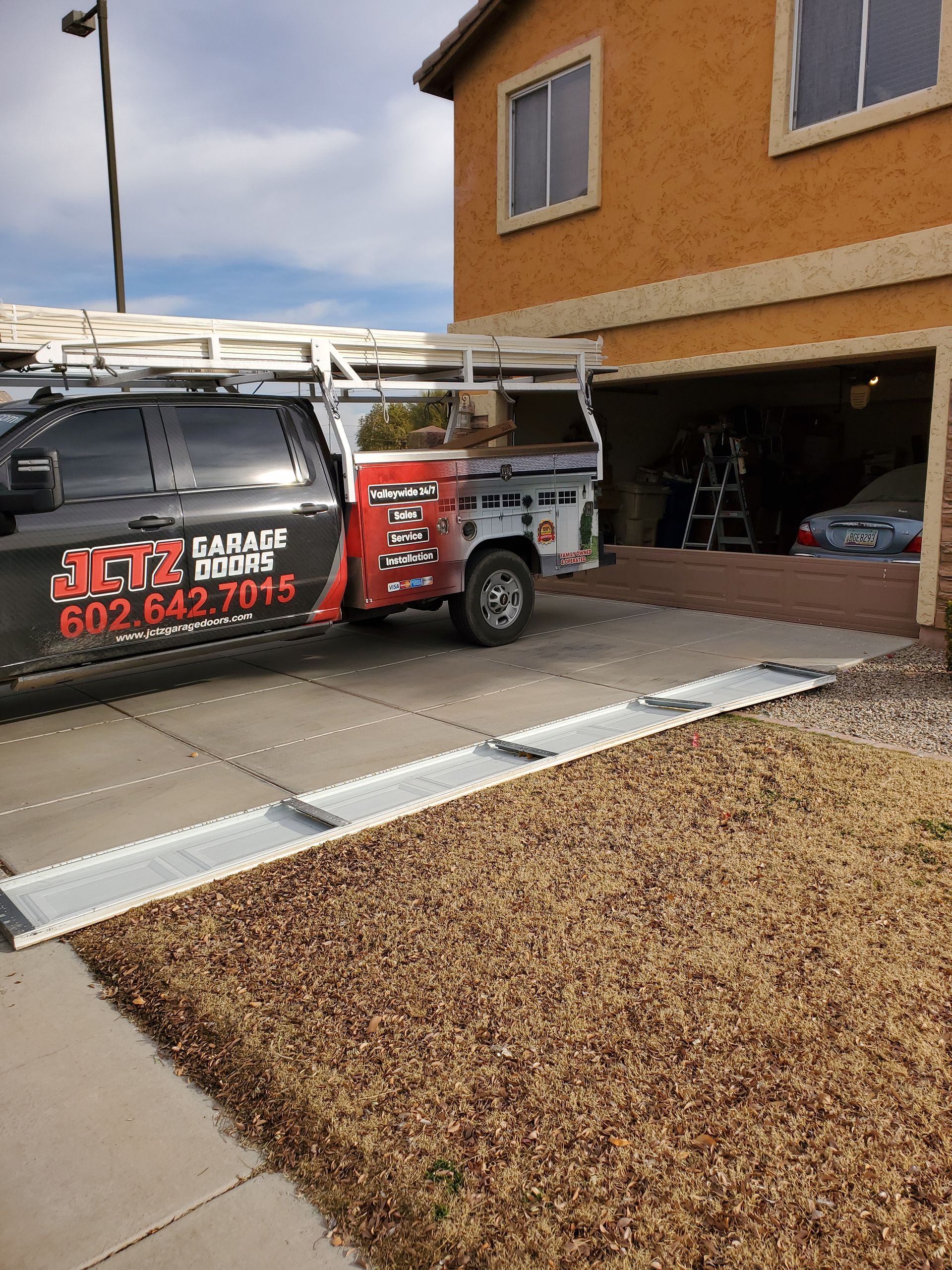
If your garage door reverses when it closes, the opener is doing its safety job: it has decided something is in the way. The usual causes are close-force or travel-limit settings being off, a roller or track binding partway down, worn rollers adding drag, or the photo eyes losing sight of each other.
Worth separating from a close cousin. A door that will not start closing at all, only in the afternoon, is usually Arizona sun washing out the safety sensors, which we covered in why the door will not close when the sun hits the sensors. This article is about the door that starts down, gets partway, and comes back up.
The Two Safety Systems That Make a Garage Door Reverse
Every opener made since the early 1990s has two ways to stop a closing door. The first is the photo eye system, two sensors about six inches off the floor shooting an invisible beam across the doorway. Break the beam and the door goes back up. The second is force sensing: the opener knows roughly how much effort your door should take, and more resistance than expected reads as hitting something. That one is the quiet culprit in most calls, because nothing is visibly in the way. The door just got harder to move.
Why a Garage Door Reverses: What We Find on Service Calls
One clue narrows it fast. Reversing at the same height every time is mechanical: track, roller, or limit setting. A random height points to the photo eyes and their wiring.
• Close force set too low, common after somebody adjusted it or after an opener install that was never dialed in for that door.
• Travel limit set too far down, so the door hits concrete and bounces back up.
• Dry or worn rollers, the number one cause we see in the West Valley. They bind in the track and add drag the opener reads as an obstruction.
• A photo eye knocked out of alignment by a bike or a trash can, so the beam lines up only some of the time.
A Call Out in Buckeye Last Summer
A customer in Buckeye called because his door went three quarters of the way down and came right back up. He had already cleaned the sensor lenses, the right instinct. It reversed at the same height every time, so we went to the track. Four feet up on the right side, one roller had worn enough to catch in a slightly tweaked section, and you could feel it running the door by hand with the opener disconnected. That drag was all it took.
New rollers, straightened track, lubed everything, reset the force. Half an hour on site with the parts already on the truck.
What You Can Safely Check Yourself
Wipe the photo eye lenses with a soft cloth and check the indicator light on each one. Both should be lit and steady, and a blinking light almost always means alignment or wiring.
Second, the balance test. Close the door, pull the red release cord to disconnect the opener, and lift it by hand to waist height. A balanced door stays where you put it and moves smoothly. If it slams down, creeps up, or catches at one spot, the problem is the door itself and no opener adjustment will fix it.
Here is where I stop you. Do not adjust spring tension. Torsion springs hold enough stored energy to break bones, and that is not a sales pitch. Opener force and limit settings are fine to look at. Springs and cables are for someone with the right tools.
The Honest Counterpoint: Sometimes You Should Not Fix the Setting
There is a shortcut online where you crank the close force up until the door stops reversing. Please do not. That safety exists because garage doors used to kill children, and turning it up until it stops complaining means the door will close on whatever is in the way, including a pet or a foot.
If the force has to go well past normal, the door is too hard to move and something mechanical needs attention. Fix the drag, not the sensitivity. A reversing door is sometimes good news, since the safety is working while something else wears out, and regular garage door maintenance catches worn rollers and drifting settings long before you are standing in the driveway.
Get It Fixed the Same Day
A garage door that reverses when it closes is normally a same-visit fix. Our trucks are stocked, so most repairs happen the first time out rather than after a parts order.
Call or text JCTZ Garage Doors at 623-335-3699 for a free estimate. Family-owned and not a franchise, ROC #343346, serving Buckeye, Surprise, Goodyear, Avondale and the West Valley. We handle garage door repair on all major brands, and if the trouble is the opener rather than the door, our garage door opener repair covers LiftMaster, Chamberlain, Genie and the rest.
Frequently Asked Questions
Why does my garage door reverse right before it touches the ground?
Almost always the down travel limit set too far. The opener believes the floor is lower than it is, so the door bottoms out on concrete, feels resistance and reverses. Small adjustment, minutes to fix.
Can cold or heat make a garage door reverse?
Heat can, indirectly. Our summers dry the grease out of rollers and hinges, so a door that closed fine in March can carry enough drag by July to trip the force sensor. That is why we push seasonal lubrication.
Is it safe to keep using a door that reverses?
For a few days while you get it looked at, generally yes, since the safety is working. What we would not do is use it that way for months, or defeat the safety. A door dragging hard enough to trip the reverse is wearing out its opener, springs and tracks the whole time.
Contact JCTZ Garage Doors
JCTZ Garage Doors
4219 S 234th Ave
Buckeye, AZ 85326
Phone: 623-335-3699
Stay connected with JCTZ Garage Doors for garage door tips, service updates, and helpful information for homeowners in Buckeye and the West Valley.
Follow JCTZ Garage Doors Online:
Facebook| X| Instagram| YouTube
Worked with JCTZ Garage Doors?