Why Is My Garage Door So Loud?
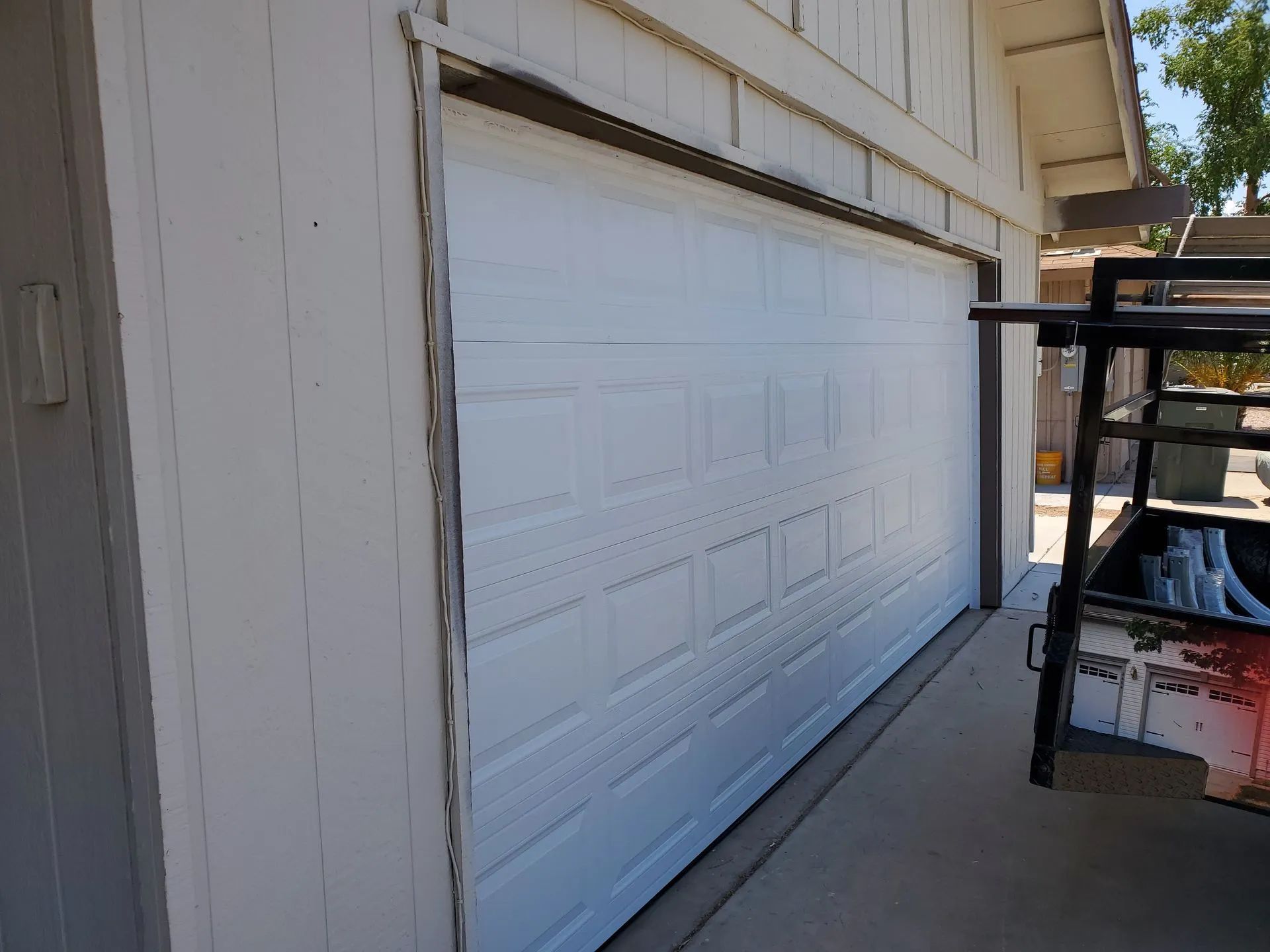
If you are asking why is my garage door so loud, it almost always comes down to one of five things: worn rollers, loose hardware, dry or damaged hinges and bearings, an old chain-drive opener, or a spring going bad. Rattles, squeals, and general racket are usually routine maintenance you can schedule whenever it is convenient. A loud bang, a grinding metal sound, or scraping means stop using the door and get it looked at before something breaks worse or somebody gets hurt.
I own JCTZ Garage Doors. We are a family shop out here in Buckeye, not a franchise, and I have been listening to garage doors for a long time. Most of the time I can tell you what is wrong before I ever see the door. Here is how to read the noise yourself.
What the noise is telling you
Doors do not make random sounds. Each noise comes from a specific part doing a specific thing wrong. Stand inside the garage, run the door up and down once, and listen for which of these you have.
Grinding
Grinding is metal dragging on metal. Usually it is roller bearings that have gone dry and locked up, so the roller is sliding in the track instead of rolling. It can also be a stripped gear inside the opener, which sounds like grinding while the door barely moves. Either way, stop running the door. Grinding rollers wear grooves into the track, and a chewed-up track costs more than a set of rollers.
Rattling or vibrating
This is the most common one and the least scary. A garage door has a lot of nuts, bolts, and hinges, and every cycle shakes them a little looser. After a few years the whole door buzzes. Loose track brackets and a loose chain on the opener rail add to it. This is a tune-up, not an emergency.
Squealing or screeching
Squealing means dry parts. Hinges, roller stems, and the torsion spring bearings have lost their lubrication. In Arizona that happens faster than most places. It is a warning shot: dry parts wear out, and worn parts break. Get it greased before it turns into grinding.
Popping or banging
A pop or a thud partway through travel usually means the door sections are binding as they go around the curve of the track. Common causes are a door that is out of level, a bent track, or hinges that have worn oval holes where the pins ride. Sometimes a torsion spring pops as the coils unstick from each other. Worth a look, not a panic.
A loud bang like a gunshot
One sharp bang, loud enough that you think somebody shot at the house or a car hit the garage, is a broken torsion spring almost every time. Do not operate the door. The spring holds the weight, not the opener. If you hit the button, the opener can drag the door up crooked, or the door can come down hard. Pull the release rope, leave the door where it is, and call somebody. Spring work involves a lot of stored energy and it is not a DIY job. If you want the background on why they fail out here, I wrote about how long garage door springs last in Arizona.
Scraping
Scraping means something is rubbing that should not be. A roller has come partway out of the track, a section is out of alignment, or a cable has jumped off its drum and the door is running crooked. Stop the door. A door that is off track can drop, and that is real weight coming down.
Why Arizona doors get loud faster
Your door is not louder than your cousin's door back east because you got a bad one. It is the desert. Three things work against us out here.
- Dust and grit. Fine desert dust gets into roller bearings and spring bearings, mixes with grease, and turns into sandpaper. That is the number one killer of rollers in the West Valley.
- Heat. A closed garage in July gets brutally hot. Heat thins grease and cooks it right out of hinges, bearings, and opener gearboxes. Parts that were quiet in March are squealing by August.
- Use. Around here the garage is the front door. Most families run the door six, eight, ten times a day. More cycles means faster wear, plain and simple.
One more thing while I am on it: please do not spray WD-40 on your garage door. WD-40 is a solvent and a water displacer. It strips out what little grease is left and leaves a thin film that attracts dust. Your door gets quiet for two days, then it comes back louder. Use a garage door lubricant, a lithium or silicone spray made for this, on the hinge pins, the roller stems, the spring bearings, and the torsion spring itself. Skip the tracks. Tracks should be clean and dry, not greasy, or they just collect grit. Twice a year is about right here. That, plus tightening the hardware, is most of what regular garage door maintenance actually is.
A door out in Verrado that woke up the whole house
A homeowner over in Verrado called me on a Tuesday morning. She said the door had been getting louder for months, but that morning her husband left for work at five and the noise rattled the bedroom wall hard enough to wake the kids. She wanted to know if the whole door needed replacing.
It did not. The door was about twelve years old with the original steel rollers. The bearings were packed with dust and four of the ten rollers would not spin at all. The hinges were bone dry, half the lag bolts on the track brackets were loose, and the opener chain had enough slack to slap the rail on every cycle.
I had nylon rollers on the truck. We keep them stocked so most jobs are one visit. Swapped all ten, tightened everything, greased the hinges and the spring bearings, and adjusted the chain. Ninety minutes, one trip, no parts run. She texted me that night and said she could not hear it from the kitchen anymore. That is a pretty normal outcome for a loud door, and it is the kind of thing our garage door repair calls usually turn into.
When a loud door is fine and you should keep your money
I will be straight with you. Not every noisy door needs a service call. A door that rattles a little and squeaks a little, but opens smooth, closes evenly, and stays put when you stop it halfway, is a healthy door that wants lubricant. Buy a can of garage door spray, hit the hinges and rollers, tighten the visible bolts with a socket, and you are done. I would rather you do that than pay me to do it.
The other honest thing: sometimes the door is fine and the opener is the problem. Old chain-drive openers are just loud by design. The chain slaps, the motor whines, and the whole rail transmits it into the ceiling and the bedroom above. If your opener is fifteen-plus years old and rattling the house, you can chase repairs on a worn gear and a stretched chain, or you can put in a quiet belt-drive unit and be done. A new garage door opener with a belt and a DC motor is night and day quieter, and we can set up MyQ on it so you can check the door from your phone. We work on LiftMaster, Chamberlain, Genie, and everything else out there, so I will tell you honestly which way is the better spend. If the door sections themselves are dented, rusted at the bottom, or coming apart, that is a different conversation and a new garage door may be the smarter money.
Call or text and we will quiet it down
If you are still wondering why is my garage door so loud, stop guessing. Call or text me at 623-335-3699 and describe the sound. Estimates are free, we offer same-day service, and the trucks carry rollers, hinges, cables, springs, and openers so most repairs get finished in one visit. We are family-owned, licensed under ROC #343346, and we work all over Buckeye, Goodyear, Litchfield Park, Avondale, Surprise, and the rest of the West Valley. You can see everything we do at JCTZ Garage Doors. And if you heard a bang like a gunshot, leave the door alone and call now.
Frequently asked questions
Can I make my garage door quieter myself?
Yes, and it is worth trying first. Get a garage door lubricant spray, not WD-40, and hit every hinge pin, every roller stem, and the bearings on each end of the torsion spring. Then take a socket wrench and snug up the bolts on the hinges and track brackets. Do not touch the bolts on the spring hardware or the cable drums.
That alone fixes a lot of noisy doors. If it is still loud after that, the parts are worn out and lubricant will not save them.
How much does it cost to fix a loud garage door?
It depends on what is making the noise. A tune-up with lubrication and hardware tightening is on the low end. A full set of quiet nylon rollers is a common fix and still a modest job. Springs and openers cost more because the parts cost more.
I give free estimates by phone or text, and I will tell you the price before I start. No surprises after the fact.
Is a loud garage door dangerous?
Usually no. Squeaks and rattles are wear, not danger. But three sounds mean stop using the door right now: a single loud bang, a grinding metal sound, and scraping. Those point to a broken spring, seized rollers, or a door coming off track.
A garage door is the heaviest moving thing in your house. When it is telling you something is wrong, believe it and let somebody look at it before you run it again.
Contact JCTZ Garage Doors
JCTZ Garage Doors
4219 S 234th Ave
Buckeye, AZ 85326
Phone: 623-335-3699
Stay connected with JCTZ Garage Doors for garage door tips, service updates, and helpful information for homeowners in Buckeye and the West Valley.
Follow JCTZ Garage Doors Online:
Facebook| X| Instagram| YouTube
Worked with JCTZ Garage Doors?